[Fractal Sprint – Live Webinar | March 24] Beyond the Portal: Building a Governed Internal Developer Platform | Register now →

Blog
Fractal Cloud and Hetzner partnership announcement highlighting multi-cloud support

Announcing Hetzner Cloud support in Fractal Cloud

Introduction

Today we are adding Hetzner Cloud to Fractal Cloud. Teams that choose Hetzner for European sovereignty can now provision secure, production‑ready Kubernetes and move workloads across vendors with a single, automated workflow. The result is developer self service with governance built in, and a clear path to sovereign multicloud without lock in.

Why this matters

Many European companies prefer Hetzner to meet data residency and sovereignty goals. Until now, getting a safe, auditable and scalable developer platform on Hetzner required custom engineering and manual guardrails. Fractal Cloud removes that work. You get ready to use infrastructure that meets security and compliance needs while keeping developer experience simple.

What is available today

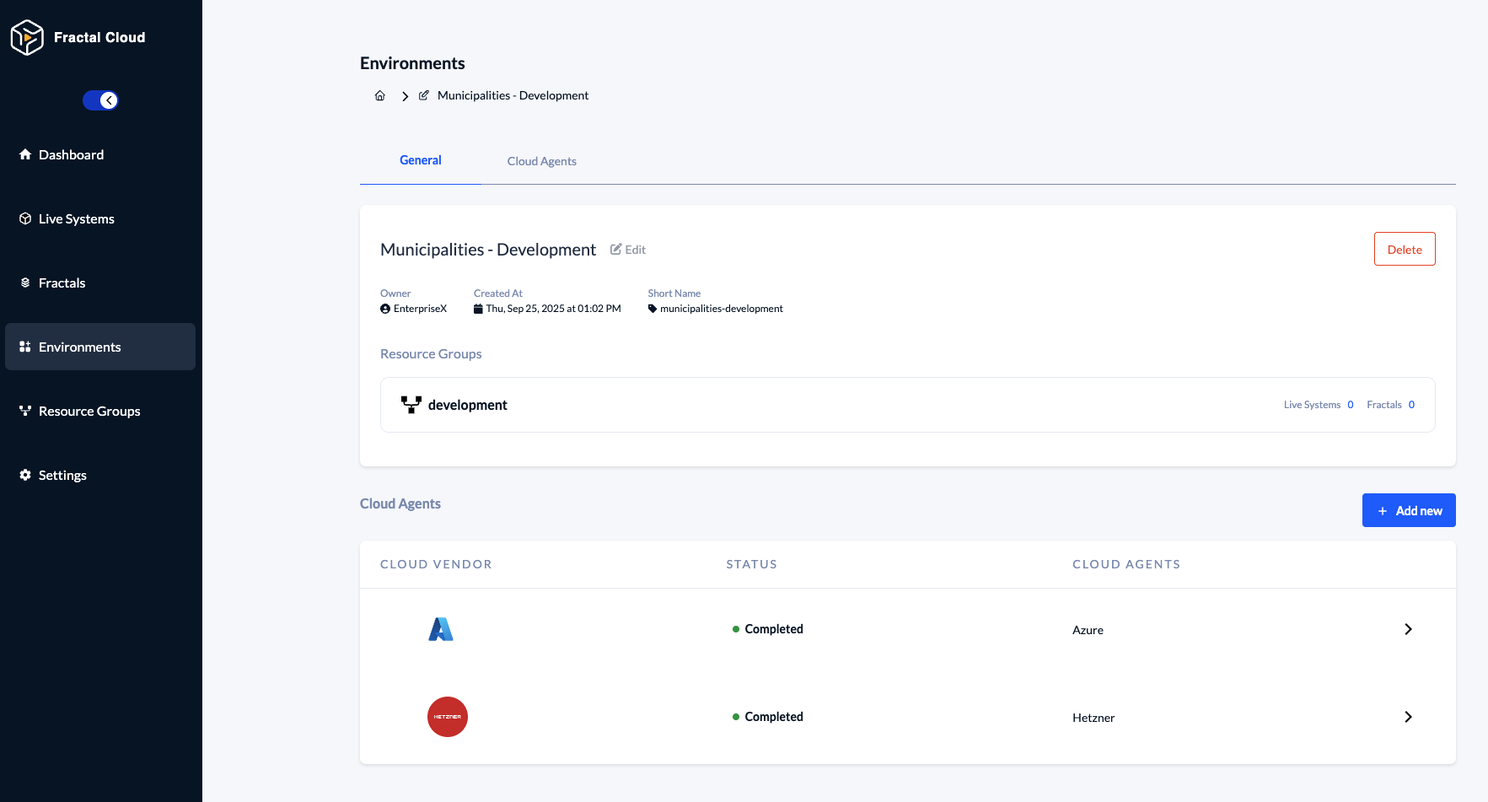
🔷 Fully managed Kubernetes on Hetzner Cloud, optimized for scale and resilience;🔷 Secure by default with RBAC, defense in depth, automated internal PKI and mutual TLS across services;🔷 Safe developer self service with namespace level access and automated deploy permissions;🔷 Complete audit trails that show who changed what and when;🔷 One workflow to migrate workloads across cloud vendors to support sovereign strategies;🔷 Consistent operations across providers using the same blueprints and controls.

How it works

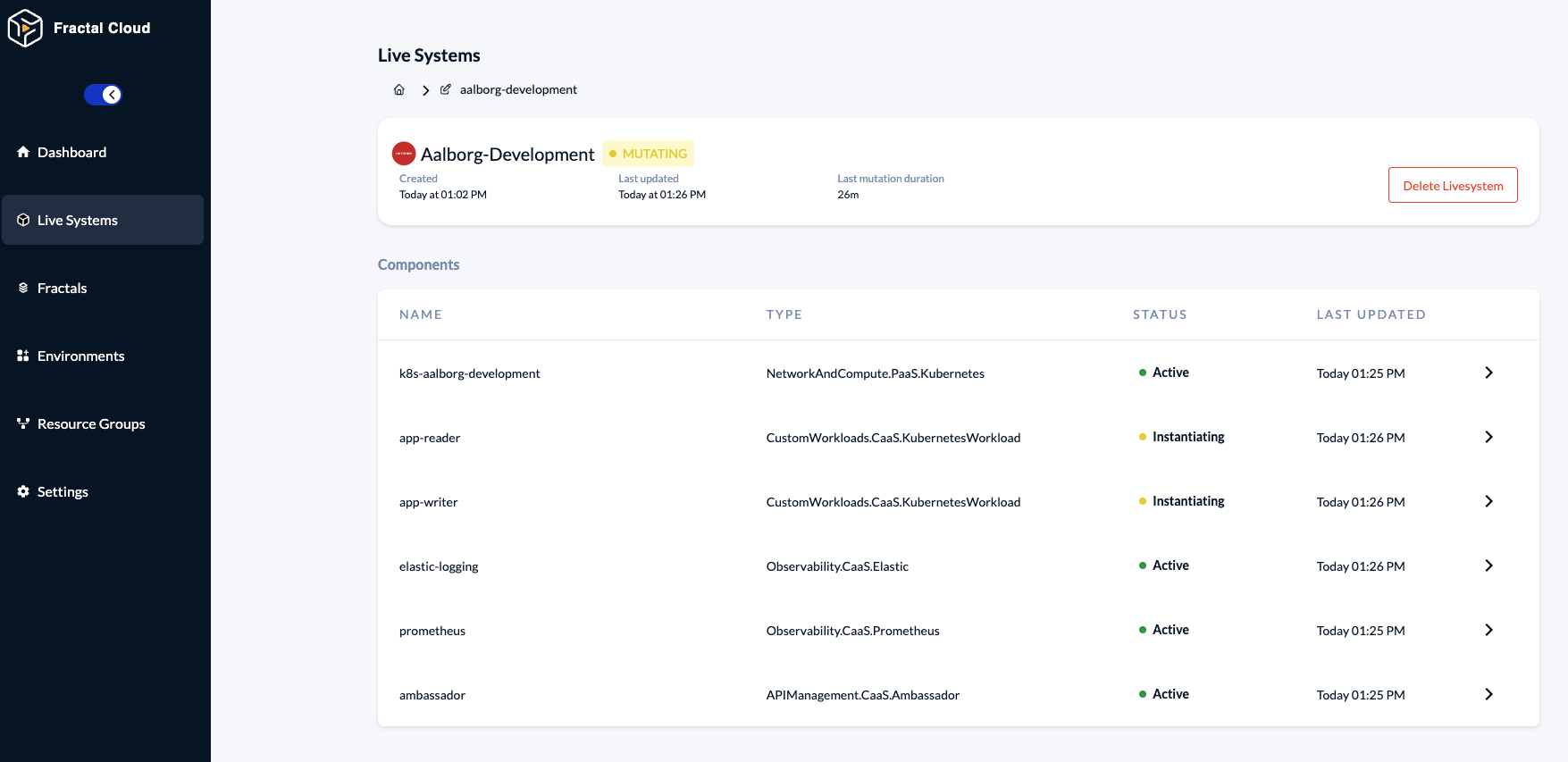
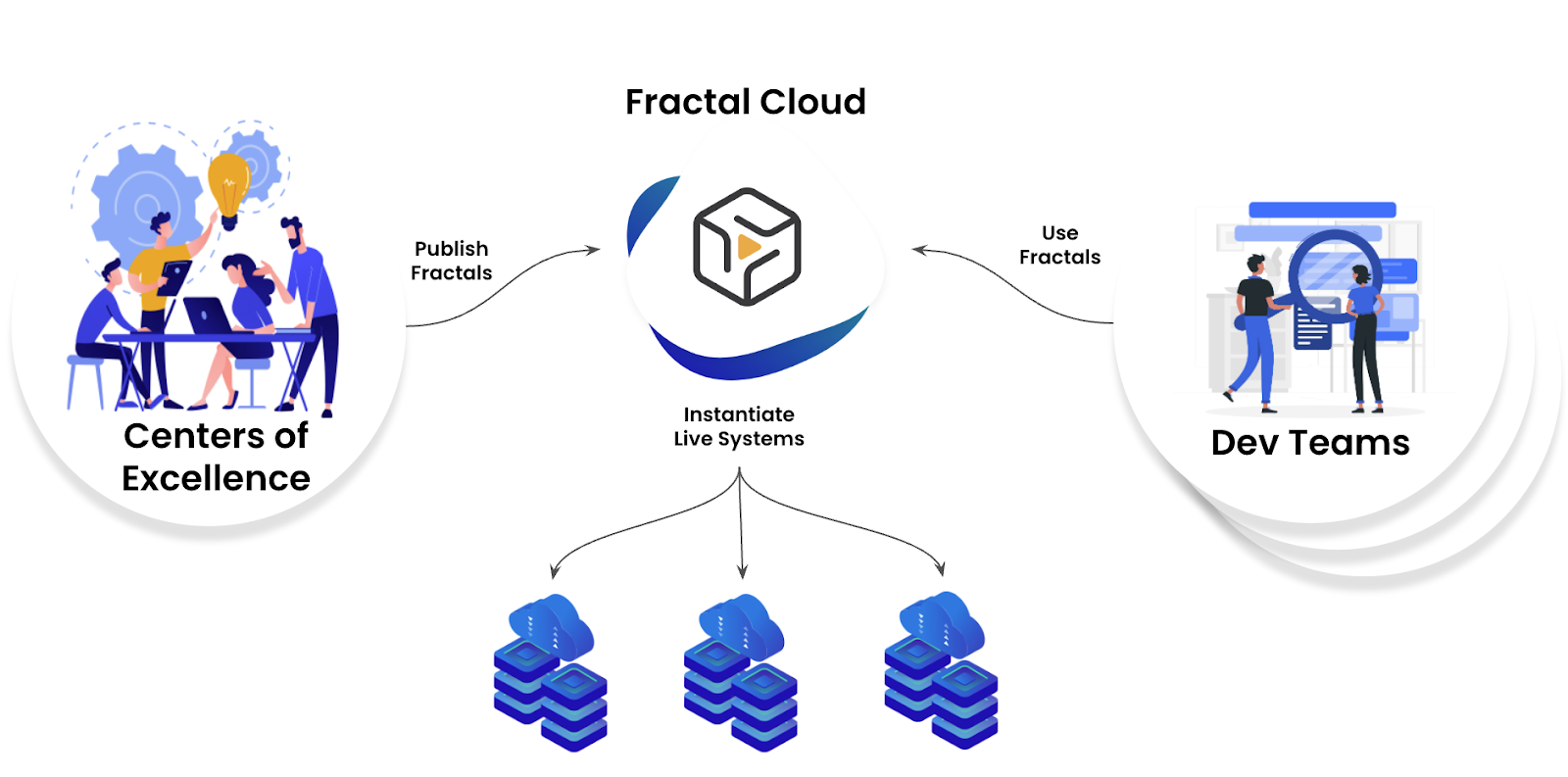
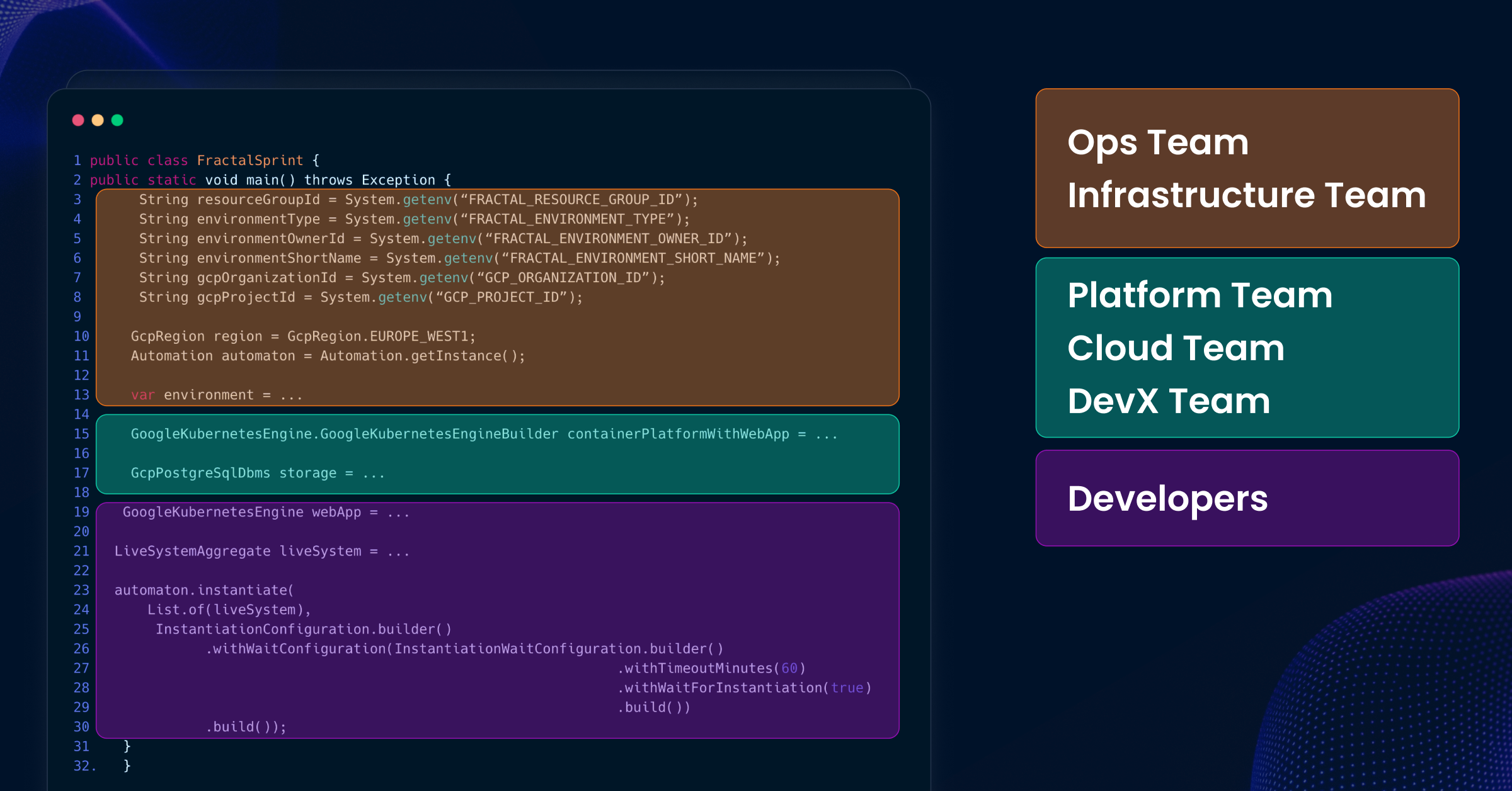
Fractal Cloud is a platform engineering solution that delivers secure, compliant infrastructure across any cloud. It gives developers ready to use building blocks and architecture templates while operations teams govern through centralized automation and policy. Under the hood, the Fractal Automation Engine orchestrates every step. Fractals are defined with our SDK in general purpose languages, today Java and next C# and Typescript. No domain specific language is required. No Terraform, Bicep or CloudFormation is needed. The Automation Engine replaces traditional IaC scripting with versioned blueprints and controlled operations.What you do:🔷 Pick a blueprint for your application pattern;🔷 Choose Hetzner as the provider and instantiate;🔷 Grant teams access by namespace with built in RBAC;🔷 Operate with standard actions for update, scale, rotate secrets and more;

Security and governance by design

Every environment instantiated through Fractal Cloud applies consistent controls. Identity, network policy, logging, backup and observability are wired in from the start. Changes are tracked. Updates can be rolled out in a controlled way. Teams ship faster without bypassing reviews, and platform owners keep a single source of truth for policy.

Portability as a strategy

Sovereign cloud is not just about where you run. It is about how easily you can move. With Fractal Cloud, the same blueprint can target different providers without rewriting infrastructure. That gives customers the freedom to choose the best vendor over time, the same way they switch phone operators, and it gives emerging European cloud providers a fair path to compete.

Beyond hyperscalers

This is only the beginning. With Fractal Cloud you can deploy and manage services that are available only on hyperscalers, as managed functions (FaaS), databases (DBaaS) and more. Our goal is to minimize differences across vendors so platform teams expose one experience, and developers focus on applications rather than vendor specifics.

Who benefits

Developers: ship without tickets. Use production ready templates. No deep cloud expertise required.Infrastructure and Operations: standardize once. Enforce policy everywhere. Monitor and update through one control plane.Technology leaders: lower risk from vendor lock in. Improve time to market. Align cloud choices with sovereignty goals.

Get started

If you run on Hetzner Cloud or plan to adopt a sovereign multicloud approach, we can help you move quickly and safely.Next steps:🔷 Book a walkthrough of Hetzner on Fractal Cloud🔷 Bring a pilot workload and see automated migration in action🔷 Explore how your platform team can publish internal blueprints with our SDKCreate your account or request a demo!Code Faster, Run Anywhere.

Cut the Wait. Reduce the Cost.
Keep Control.

More articles

From Weeks to Minutes: Combining Speed and Governance in Cloud Environments with Fractal Cloud

From Weeks to Minutes: Combining Speed and Governance in Cloud Environments with Fractal Cloud

The cloud promised instant scale, yet in many enterprise organizations, developers still wait days or even weeks for a new environment to be provisioned. The bottleneck is rarely technical; modern cloud providers have made resource allocation virtually instantaneous. What truly slows organizations down is the bureaucratic labyrinth of governance.Production environments must rigidly comply with security policies, architectural standards, observability requirements, and cost controls. Ensuring all these constraints are respected typically forces a slow-motion negotiation between infrastructure operators, platform engineering teams, and application developers. Without a unifying abstraction layer, every single deployment becomes a painful compromise between development speed and operational control.Fractal Cloud was engineered to obliterate this tradeoff. As a premier Internal Developer Platform (IDP), it delivers secure, universally compliant infrastructure across any cloud provider, setting a new standard for platform engineering. By equipping teams with ready-to-use building blocks that natively combine vendor-specific knowledge with security best practices, Fractal Cloud unlocks a frictionless developer experience. Organizations can finally transition from manual, ticket-based provisioning to a governed self-service model where fully compliant infrastructure is instantiated in minutes.Crucially, this frictionless experience does not force engineers to change how they work; it meets them where they are. While code-first developers can leverage a powerful SDK, the Internal Developer Platform also features an intuitive, elegantly designed Web interface to manage the entire resource lifecycle visually. Teams can visually browse a catalog of available building blocks, launch new environments, and manage running systems through guided workflows without writing a single line of code. Regardless of the interaction model chosen Web UI or SDK, both paths are strictly governed by the exact same architectural rules and abstractions.
Platform Engineering 2026: Beyond the Portal, Toward the Invisible Control Plane

Platform Engineering 2026: Beyond the Portal, Toward the Invisible Control Plane

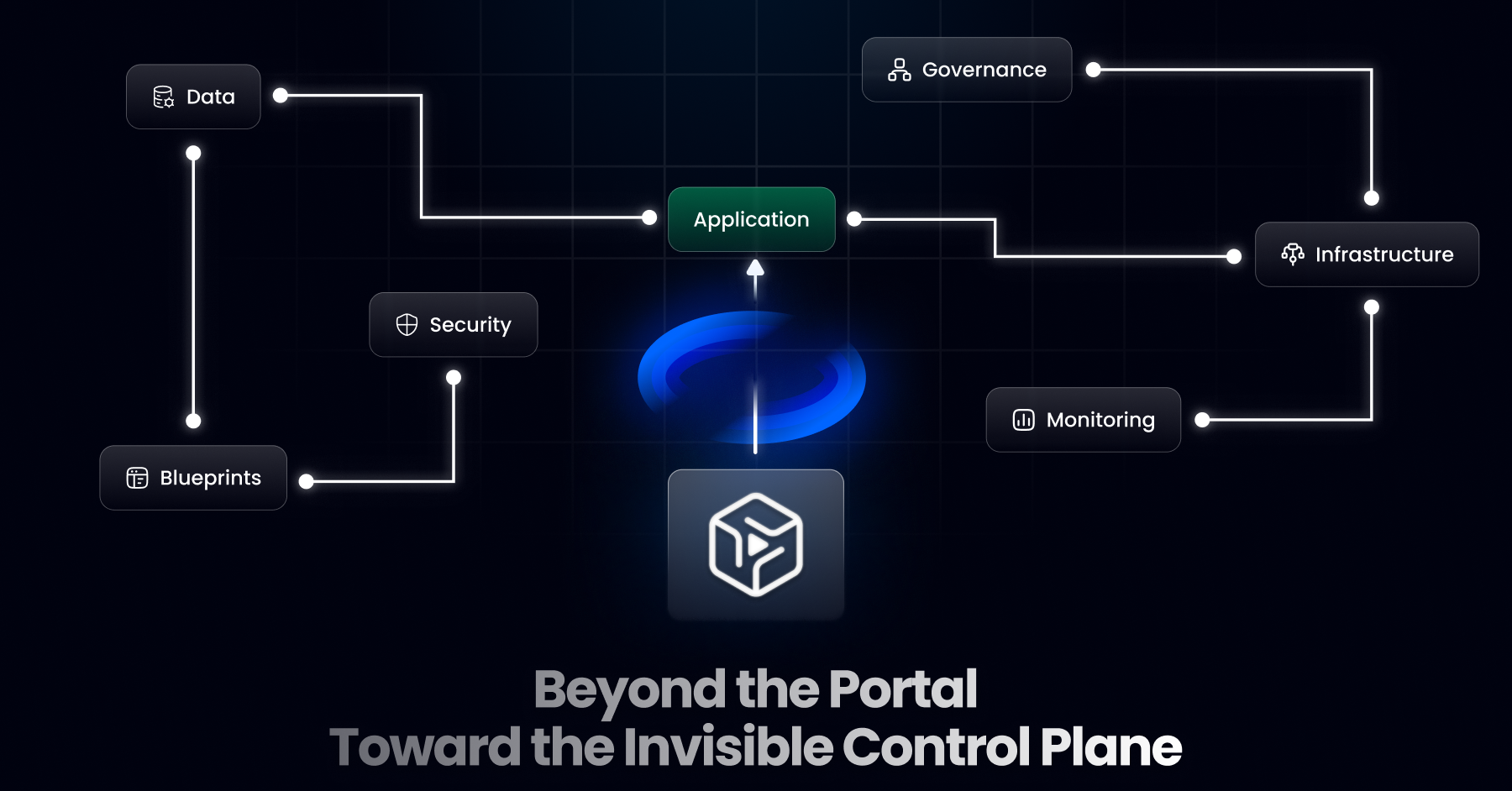
Looking back at 2024, we remember the obsession with "UI-first thinking." At the time, many companies fell into the trap of confusing the interface with the platform, spending months implementing developer portals (like Backstage) without first resolving the underlying fragmentation.It is precisely to overcome this confusion between interface and platform that solutions like Fractal Cloud are born as a control plane first, rather than just a visible product. Today, in 2026, we know that the portal is just a view, not the substance.Platform Engineering has matured, transforming from the management of integrated toolchains into a product discipline. The Internal Platform is no longer an agglomeration of scripts and services, but a proper product with a roadmap, stable APIs, clear ownership, and a governed lifecycle.In Fractal Cloud, the platform is a governed product: every exposed capability is deliberately limited, versioned, and traceable.The driver for this evolution was the need to manage a level of complexity that is no longer compressible by humans alone. Between provider fragmentation, AI costs, and supply chain security, the cognitive load on the individual developer became unsustainable. In 2026, the Platform does not serve to "facilitate" via graphical interfaces; it serves to ensure determinism.Here is how the discipline has evolved and why the Internal Developer Platform (IDP) of the future is, first and foremost, an operating model.

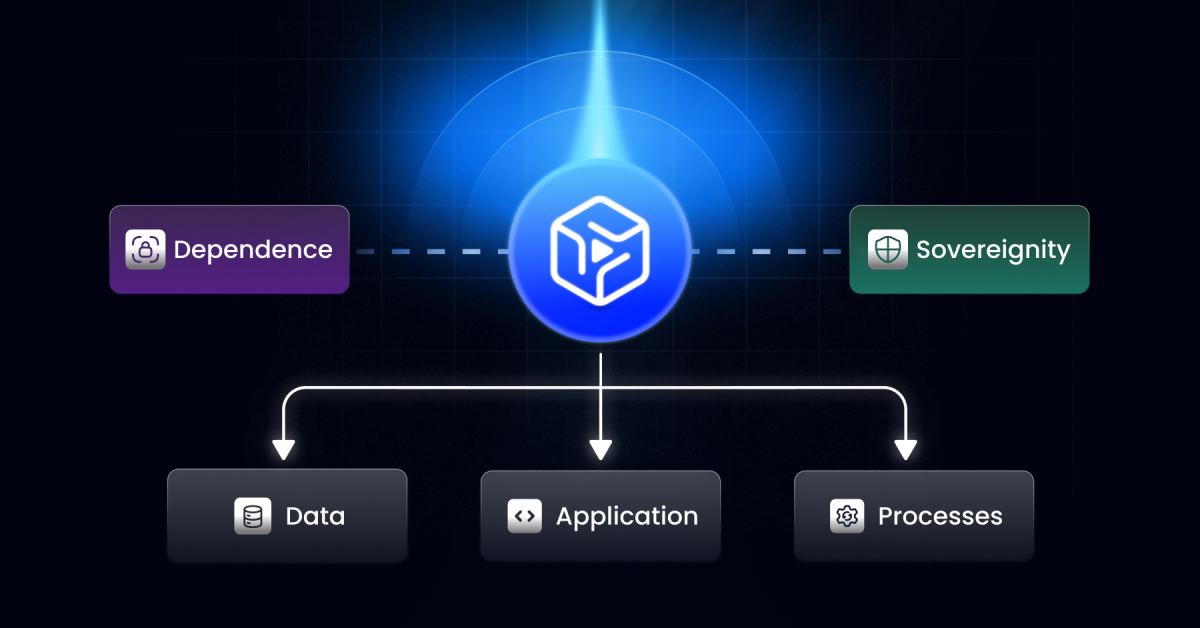
Architecture diagram showing Fractal Cloud enabling cloud sovereignty by controlling data, applications, and operational processes without vendor dependency

Absolute Autonomy: Why Cloud Sovereignty Allows No "Grey Areas"

In the debate over IT modernization, a comfortable yet dangerous narrative has taken hold: the idea that cloud sovereignty is a spectrum, a scale of greys where "a little compliance" is still a step in the right direction.