Traditional tools fall short
Infrastructure as Code has brought enormous value. But most tools, while powerful, are designed with a static mindset. They rely on a state file that represents the intended configuration but don’t actively verify whether that configuration still matches what’s actually running in the cloud.A single manual change, a hotfix outside of the pipeline, or an inconsistency copied between environments can throw everything off. And the system won’t raise a flag. There’s no built-in reconciliation. No ongoing validation. The infrastructure quietly drifts away from what was originally planned.Even updating a component becomes risky. Teams delay patches. Reprovisioning feels too disruptive. Over time, maintenance is avoided; not by design, but by fear. The speed promised by automation is lost in the operational mess of day-two reality.Keeping environments healthy, secure, and consistent requires more than good provisioning. It demands visibility, control, and a model where maintenance is part of the platform’s DNA.
Fractal and the Continuous Management of Live Systems
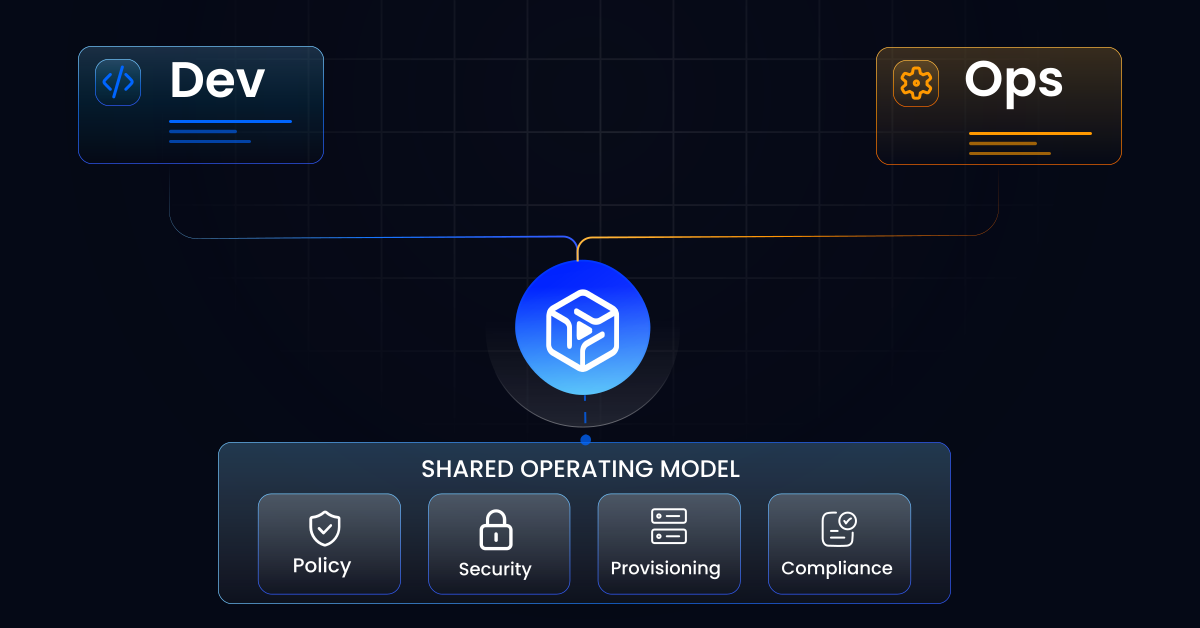
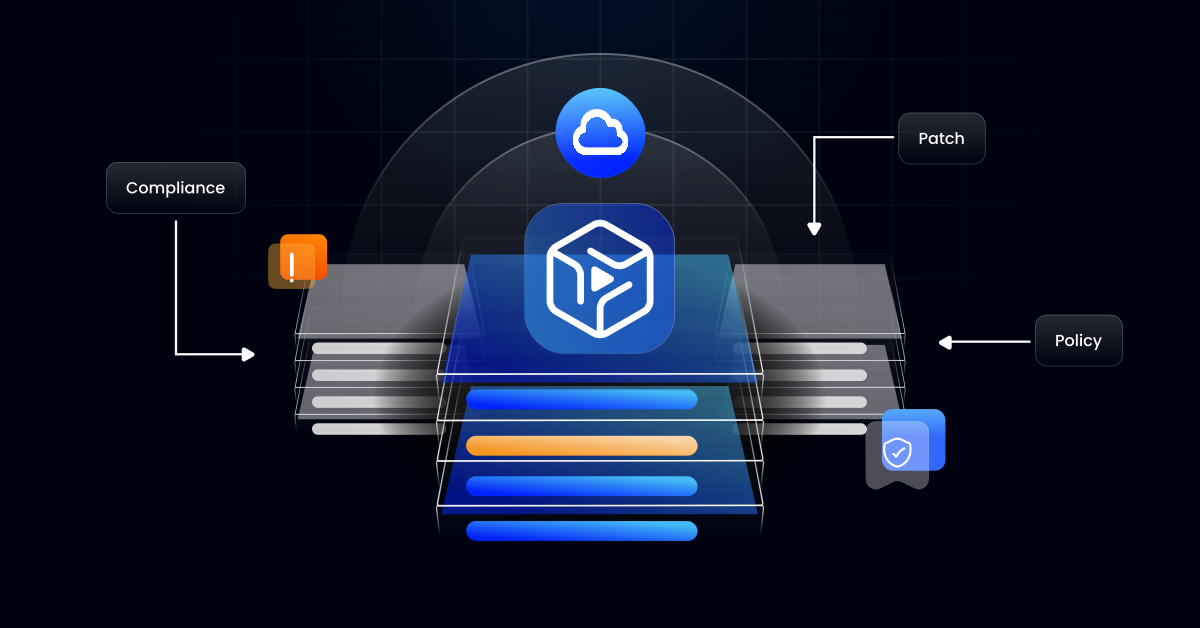
Fractal Cloud was designed with this exact challenge in mind. It doesn’t just create environments, it governs them continuously. Every environment instantiated in Fractal becomes a live system: observable, traceable, and actively managed.At the core of this approach is the Fractal Automation Engine. It doesn’t simply execute deployments, it watches over them. It continuously compares the actual infrastructure against its intended blueprint. If something drifts, the system knows. And it can reconcile it, automatically, without interrupting workloads. Updates are applied safely, within predefined operational windows, with no need to tear anything down.This changes everything. Maintenance is no longer a manual burden that teams have to plan around. It becomes a built-in feature of the platform. Security policies, patches, compliance rules, all are embedded at the design level. Every environment stays aligned, consistent, and compliant without additional effort.For engineering teams, that means fewer surprises, fewer late-night tickets, fewer firefights. Time once spent holding environments together can now be spent moving the product forward. It’s not just about reducing errors. It’s about freeing your teams to build.Today, what separates resilient infrastructure from fragile setups isn’t how fast it was deployed. It’s how well it’s maintained over time. That’s where Fractal makes the difference.