Fractal Sprint | Webinar: How to Build a Governed Developer Platform | Watch Now →

Blog

Notes on the agentic platform, governance and sovereignty, plus stories from the customers and partners we work with.

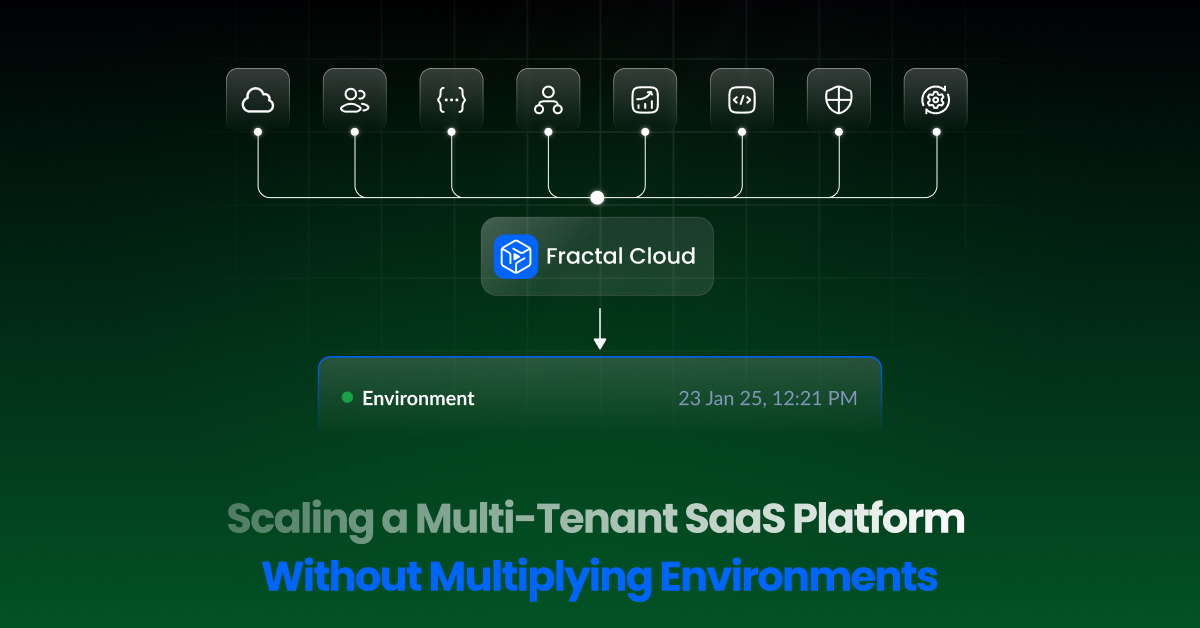
Multi-tenant SaaS scaling architecture showing centralized control plane and standardized environments without duplication

Multi-Tenant SaaS: Onboard Customers Without New Environments

You land a new enterprise customer. The sales team celebrates. Then someone opens a Jira ticket to provision their isolated environment.The ticket goes to the platform team. Who checks what was done last time. Create a IaC workspace per tenant. Who runs the pipeline. Who reviews the networking. Who, two weeks later, hands over a URL.Scale that by ten customers. By fifty. You don't have a growth problem. You have an infrastructure production line problem, and it's about to become a ceiling.

Platform Automation
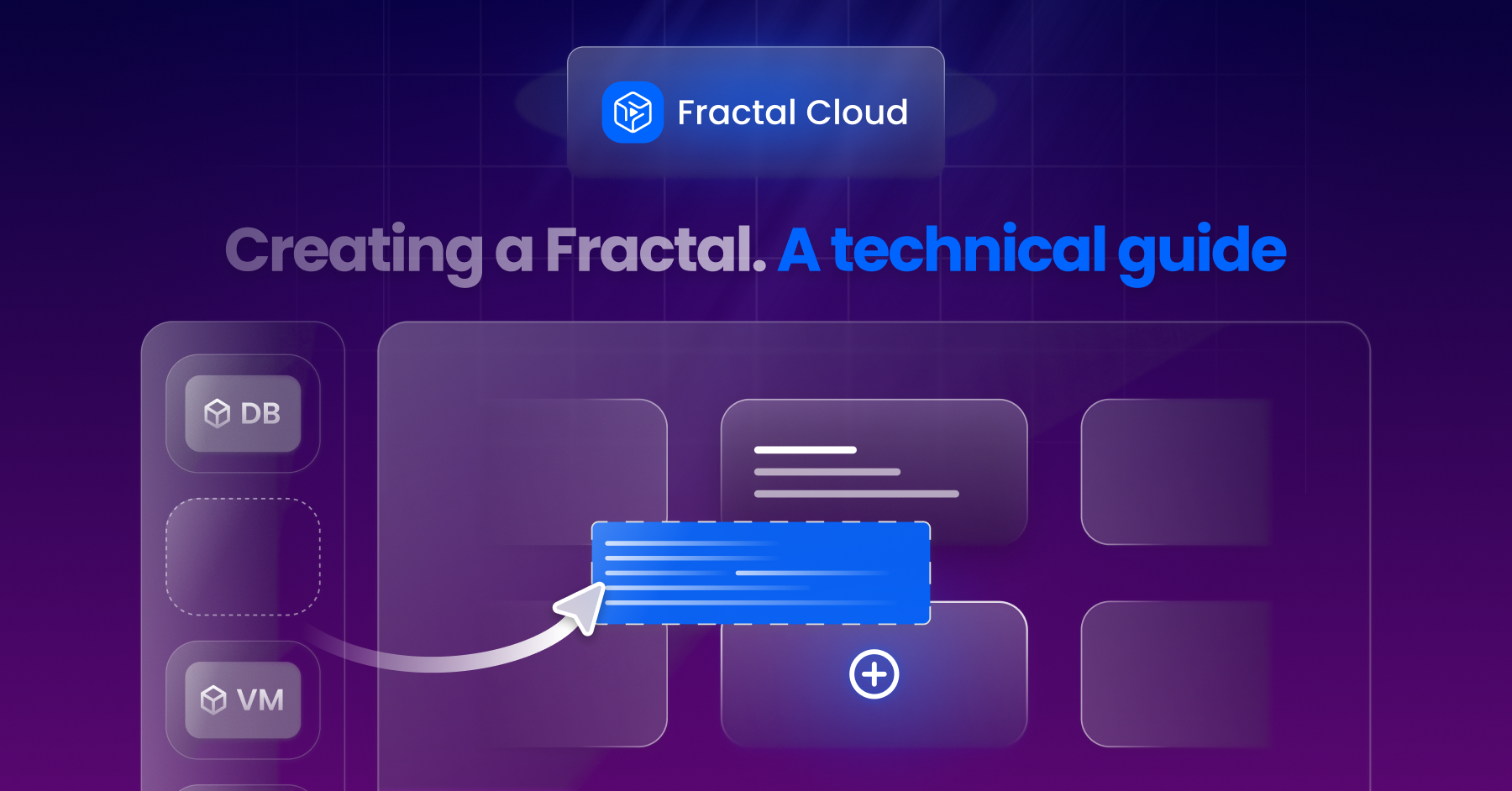
Fractal Cloud interface showing how to create a Fractal and build reusable infrastructure
Why Cloud Environments Still Take Weeks (And How to Fix It)

Why Cloud Environments Still Take Weeks (And How to Fix It)

The cloud promised instant scale, yet in many enterprise organizations, developers still wait days or even weeks for a new environment to be provisioned. The bottleneck is rarely technical; modern cloud providers have made resource allocation virtually instantaneous. What truly slows organizations down is the bureaucratic labyrinth of governance.Production environments must rigidly comply with security policies, architectural standards, observability requirements, and cost controls. Ensuring all these constraints are respected typically forces a slow-motion negotiation between infrastructure operators, platform engineering teams, and application developers. Without a unifying abstraction layer, every single deployment becomes a painful compromise between development speed and operational control.Fractal Cloud was engineered to obliterate this tradeoff. As a premier Internal Developer Platform (IDP), it delivers secure, universally compliant infrastructure across any cloud provider, setting a new standard for platform engineering. By equipping teams with ready-to-use building blocks that natively combine vendor-specific knowledge with security best practices, Fractal Cloud unlocks a frictionless developer experience. Organizations can finally transition from manual, ticket-based provisioning to a governed self-service model where fully compliant infrastructure is instantiated in minutes.Crucially, this frictionless experience does not force engineers to change how they work; it meets them where they are. While code-first developers can leverage a powerful SDK, the Internal Developer Platform also features an intuitive, elegantly designed Web interface to manage the entire resource lifecycle visually. Teams can visually browse a catalog of available building blocks, launch new environments, and manage running systems through guided workflows without writing a single line of code. Regardless of the interaction model chosen Web UI or SDK, both paths are strictly governed by the exact same architectural rules and abstractions.

Platform Automation
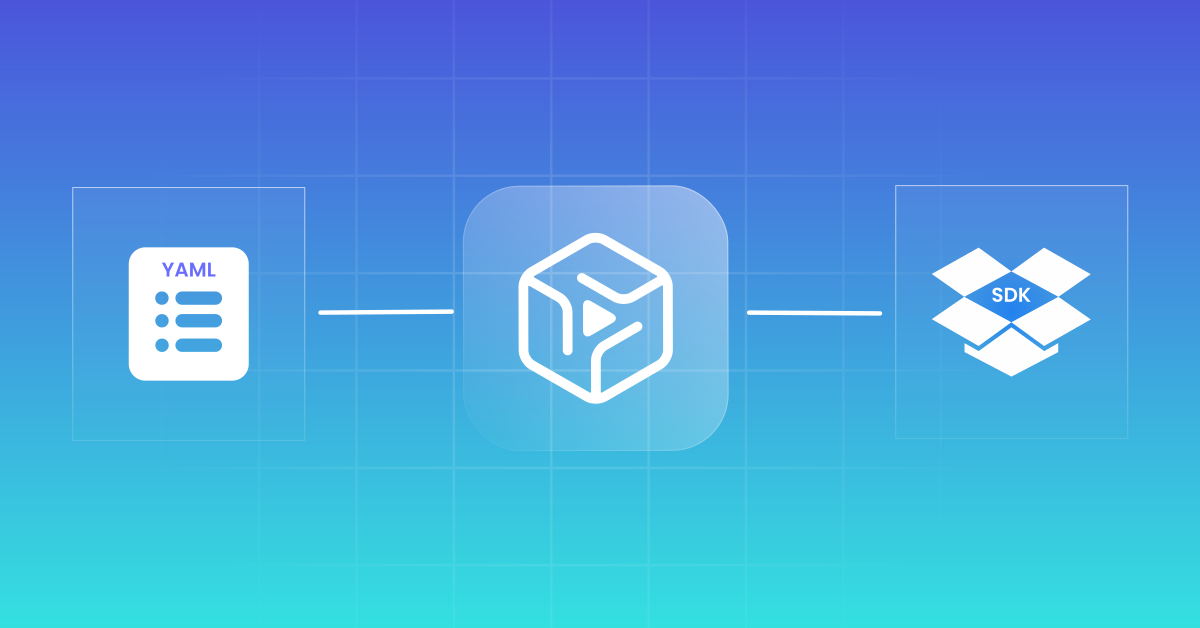
Comparison diagram between traditional YAML-based infrastructure configuration and an SDK-based software engineering approach

Beyond YAML: How an SDK Elevates Infrastructure as Code to a True Software Engineering Discipline

For years, Infrastructure as Code (IaC) has promised us the ability to manage cloud complexity with the same efficiency as application code. Tools based on declarative languages and YAML configuration files have revolutionized the way we work, allowing us to define our desired state. But let's be honest: how many times have we found ourselves copying and pasting hundreds of lines of YAML, only to change a couple of values? How often have we fought with the syntax of a loop in a configuration language or skipped writing a test because "it's just config"?This approach, while powerful, has forced us to operate with a limited set of tools. Complex logic, reusability, and testability remain painful. It gave us the "Code" part of IaC, but it deprived us of the "Engineering" part.What if we could overcome these limits? What if we could define our infrastructure using the same power, flexibility, and patterns we use to build our business applications? This is the paradigm shift that an SDK in a true programming language brings to the table.

Platform Automation